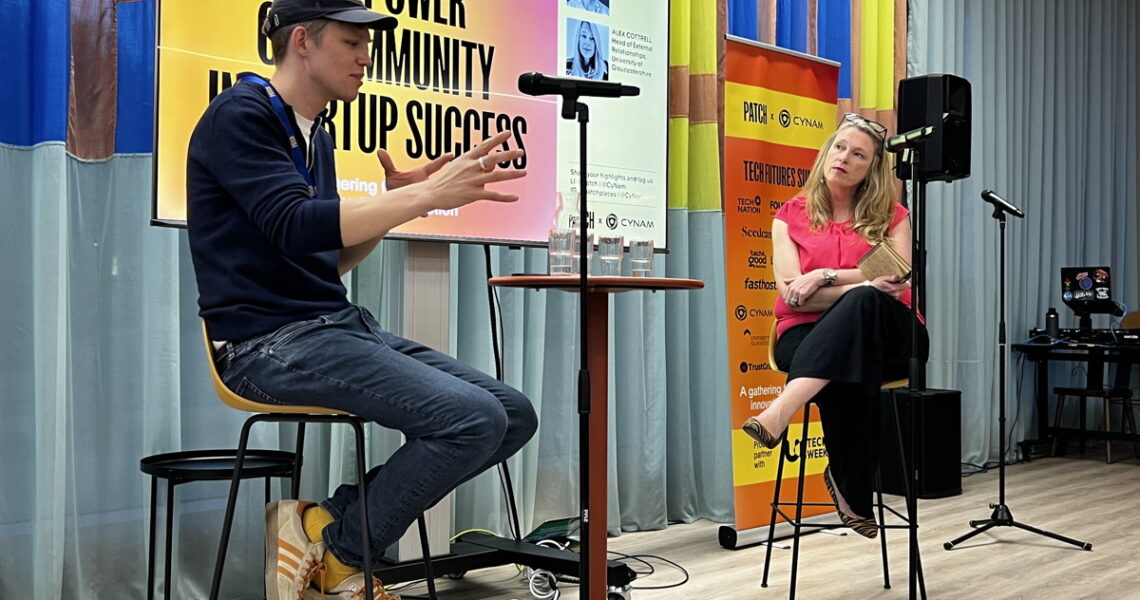
Tech Futures Summit 2026, Gloucester
26/03/2026I pop up to Cheltenham every now and again to keep an eye on what’s happening. There is a thriving Cyber scene as well as an obvious government agency there, so it’s good to share information.
Cynam is the organisation that organisations many of the events, usually from their base at the Hub8 coworking spaces.
I went back up in March but this time to Gloucester. Patch have recently opened a coworking space in Gloucester, which seems to be getting a lot of regeneration now. I’ve stayed one weekend and it was nice by the river but didn’t realise there was all the new stuff going on.
This event was called Tech Futures Summit. It featured a range of speakers from the local business community, Gloucester County Council, Gloucester University and even the founder of Patch itself.
Tech Futures Summit – Day 1
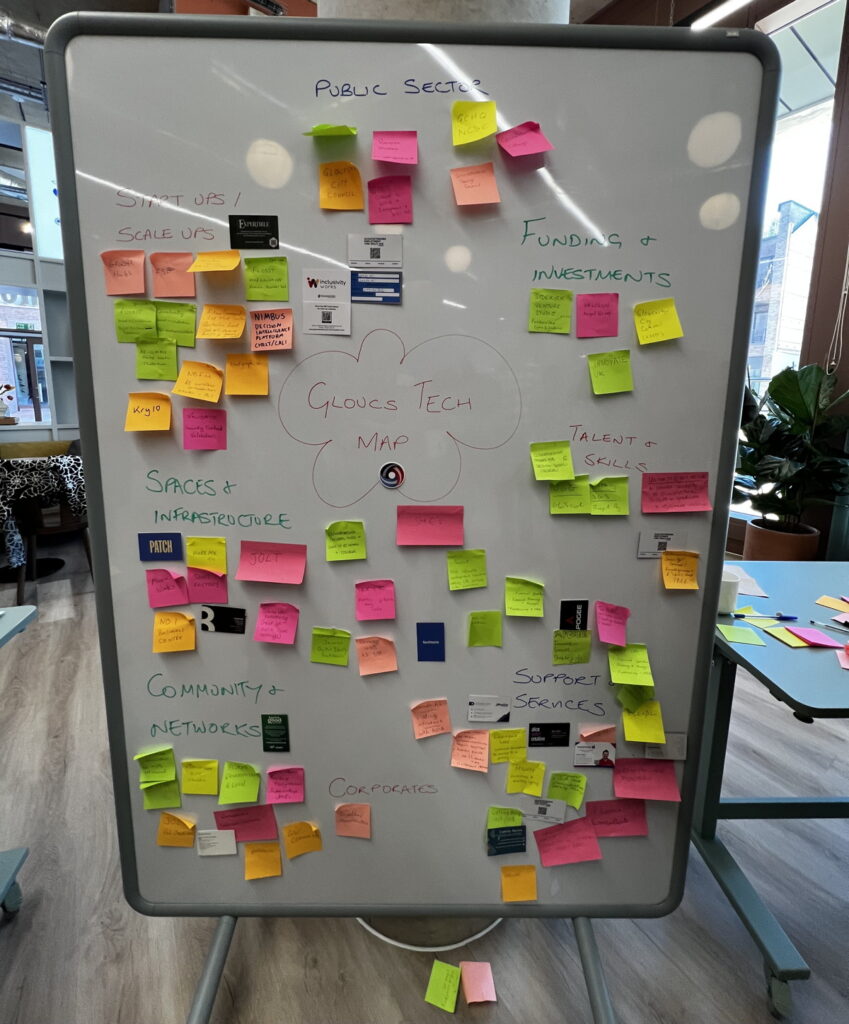
The first event was “The Gloucestershire Tech Map: A Collaborative Networking Lunch” which invited the businesses and organisations in the room to contribute to a whiteboard.
They added their details to the sections on the board that related to them,
This was a starter for understanding who sits where in the local ecosystem and should build up into a larger dataset available for people to use and connect.
The second session of the day was “Better, Connected: The Power of Community in Startup Success” where the founder of Patch was interviewed.
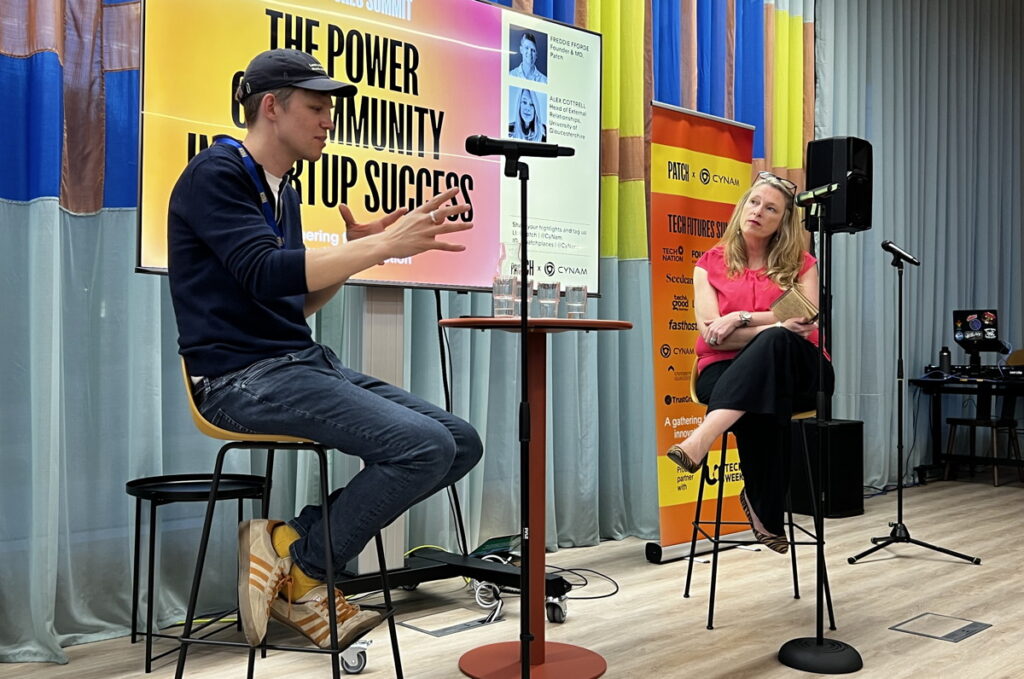
I found it interesting that Freddie Fforde, Patch founder, said that the ethos wasn’t to build coworking spaces pure as desks for rent, but for Patch to be a “front door to opportunity on every high street”. This is why they’re not on business parks and out of town places. They are far more accessible to the public and the use of event spaces there are community led. “Less community, more community” he also said.
Tech Futures Summit – Day 2
The first session of the second day was “Ecosystem Audit: Where We Stand & What We Lack” which brought a broad panel from the university, the county council, small business and supporting organisations.
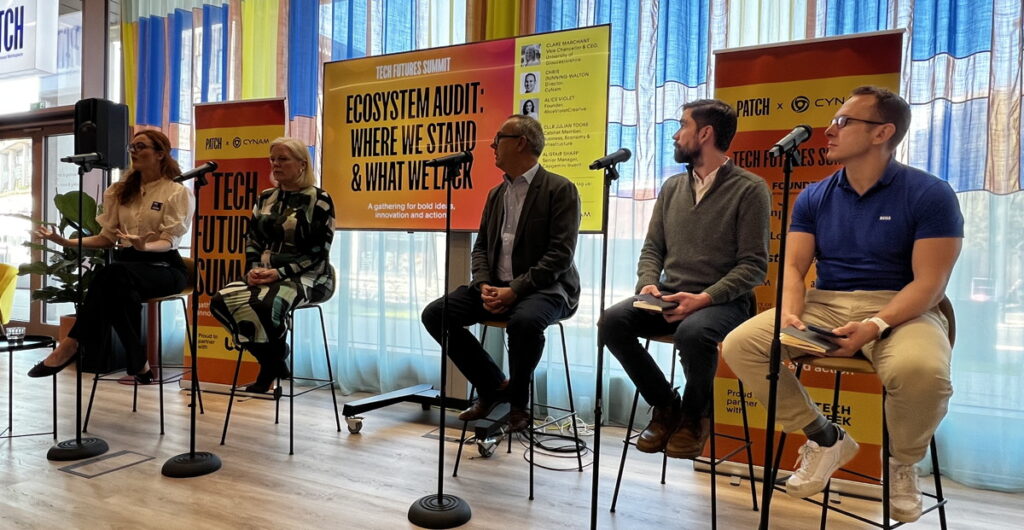
I didn’t realise the rivalry between Gloucester and Cheltenham, and the councillor even said at times it was just mean spirited. I also think there are bigger battles to win locally, and we should be working together.
Gloucester University now has campuses in both places and maybe that can start to join the dots for the region.
I heard the word pride mentioned a few times by people as well as heritage. It goes to show people love living in the area. It has a lot to give for those that love the outdoors to relax after work.
In a different session, Reid Derby mentioned the word mission. From a Cheltenham perspective and having GCHQ there, the mission to protect the UK from threats is clear and palpable by the presence of the doughnut building.
Does that make the mission for Gloucestershire any clearer?
It was commented that GCHQ shouldn’t be taken for granted and that the Golden Valley development will be highly occupied. Is there a need to find more large anchor tenants?
The panellist from Cap Gemini spoke about Station F in Paris and that there isn’t the kind of larger scale accelerator programmes locally that they have.
There was a point around intellectual property and sovereign capability, where this was not attractive to VCs and funding if UK governmental bodies want to acquire and keep it within government.
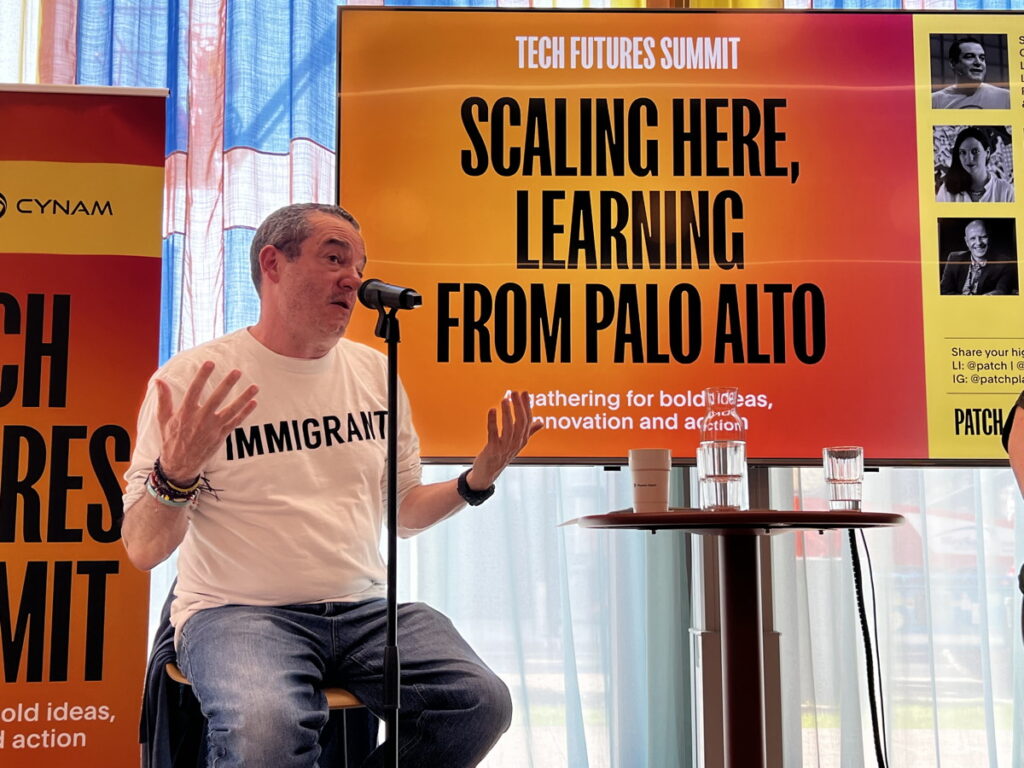
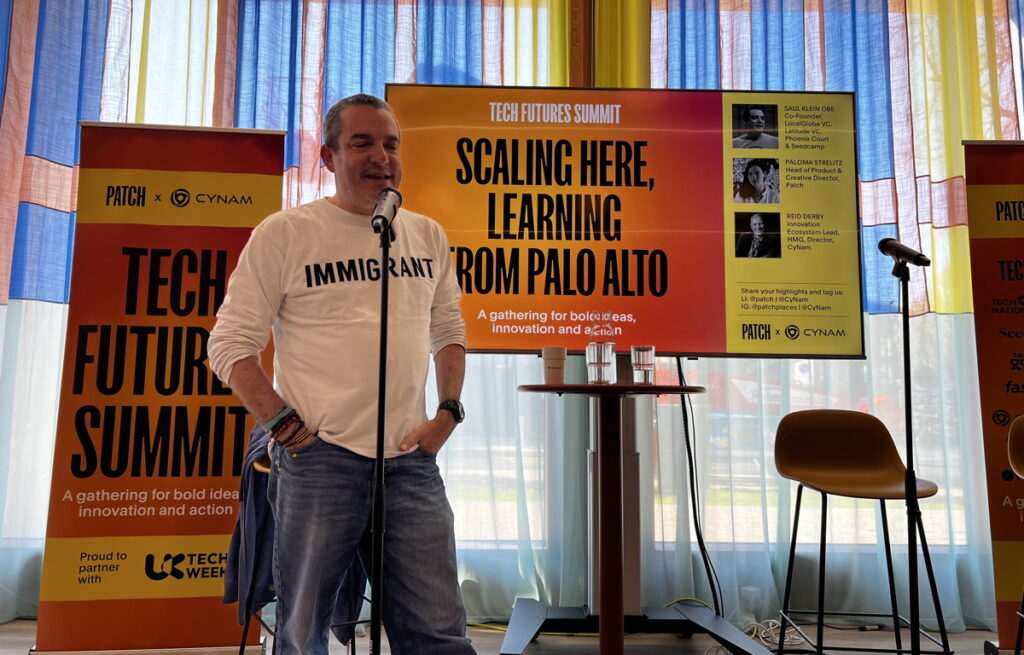
My final session was “Scaling here, learning from Palo Alto.”, which was a short talk but Saul Klein.
Make your profit do good
Saul made for an interesting speaker on the second day. A successful entrepreneur and now venture capitalist, whose approach appears to be more benevolent capitalism.
A large part of his talk revolved around the fact that in London there is this concentration of business, investors and wealth within proximity of St Pancras Station, whilst nearby Somers Town and similar neighbourhoods are simply left behind. Poverty is rife and lifespans are lower.
Saul says that this “New Palo Alto” should be more altruistic and be more giving. This can also be a mindset for any other business, to put back in, into the local area to improve life for others.
https://www.wired.com/story/europe-is-the-new-palo-alto
My final thoughts?
What I saw over the course of the two day event, and sadly I missed the final panel discussion “Tech Futures: Bold Leadership for a New Era”, was a wide range of entities in the room, thriving and very supportive of what’s going on.
Being from Dorset, I still heard many of the same challenges, such as attracting skills and investment, providing opportunities for the young, understanding what the Gloucestershire offer is, how to compete regionally against the mayoral areas, should they be teaming up with Bristol to compete and so on.
Saul did mention so many other businesses doing well in their specialisms around the UK, especially photonics in Southampton. He said that we have lost the first world war when it comes to technology, around server platforms and operating systems for example, so we should forget that and move on. There is the opportunity to win on these new frontiers.
I have sat in several meetings with the local council leaders and MP where the discussion goes towards how we attract the next Apple and Microsoft down, or any other large tech employer. Currently I don’t know if that would be a good thing or not. I know it would have an impact on local smaller businesses trying to retain staff already. However, for the future of the region, will it be a good thing? I guess so if there is a fairer supply chain and associated ecosystem.
Another reason why I travel to other places to their tech and cluster events, is to share anything I find, and to try and connect the dots. We should all be collaborating as a country and competing globally for UK sustainability and resilience. That was a clear message from Saul too.
Congratulations to Hollie Wakefield and the Cynam team.